The Storage Mistakes That Ruin Gel Bait Before You Even Use It
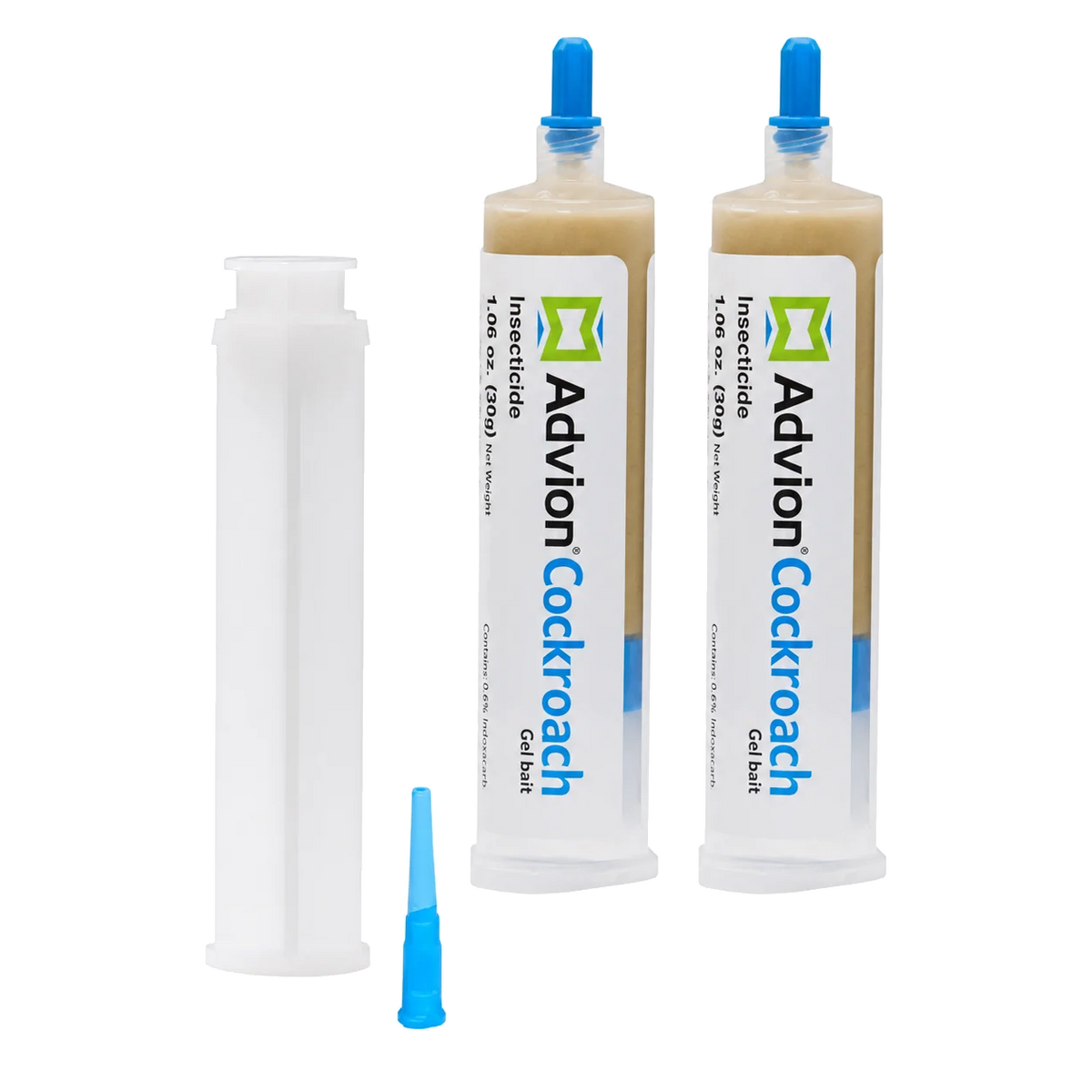
Here is something most people never consider: a genuine, correctly-applied gel bait can still fail — because it was already degraded before it reached your kitchen.
Storage is the most overlooked variable in pest control, and in the UAE climate it matters more than almost anywhere else.
First, a fact that surprises most buyers
Advion Cockroach Gel Bait carries no printed expiry date. Neither does Advion Ant Gel. This is not an oversight and not a sign of a counterfeit — it is Syngenta's own policy.
The reason is straightforward: shelf life depends on storage conditions, not on a calendar date. Syngenta states that under ideal conditions — indoors, with minimal temperature and humidity fluctuation — the gel can last up to five years. Store it badly and it may be unusable in months.
So a fixed expiry date printed on the tube would be misleading. What the tube carries instead is a batch number, which traces the production run.
Worth knowing: if a seller advertises a specific expiry date for this product, ask where it came from. The manufacturer does not print one.
What heat actually does to gel bait
Gel bait is roughly 99% food matrix — sugars, proteins and attractants — with a small percentage of active ingredient. It is the food part that degrades, not the chemistry.
Above roughly 50°C the gel liquefies. It loses its shape, runs out of the crack you placed it in, and the matrix separates.
Through repeated heat cycles — hot day, cooler night, hot day again — the surface dries and crusts. A crusted dot is still "there", but roaches largely stop feeding on it.
And here is the critical point: the active ingredient may remain perfectly potent. But if the bait is no longer palatable, the roaches never eat it — so it never works. A gel bait that isn't eaten is not a weak insecticide; it is no insecticide at all.
The five storage mistakes
1. Leaving it in the car. The single most damaging mistake in this region. A parked car in a UAE summer afternoon reaches temperatures far beyond what the gel tolerates. One afternoon can be enough.
2. Storing in a garage, balcony store or unairconditioned store room. These track outdoor temperatures. A tube kept there through summer is likely compromised before first use.
3. Keeping it near heat indoors. On top of the fridge, beside the oven, in a cupboard above the cooker, or in direct sunlight through a window. All warmer than they look.
4. Leaving the tube open without the cap. The tip dries out and blocks. Replace the cap after every application.
5. Applying onto hot surfaces. Placing gel directly on oven sides, hot water pipes or appliance exteriors that heat up. Apply it in the surrounding cracks instead — near the warmth, not on it.
How to store it properly
- Indoors, in an air-conditioned part of the home
- A closed cupboard, away from direct sunlight
- Cool and dry — ideally below 30°C
- Cap on, upright, away from food and out of reach of children
- Keep it in its original packaging so the label and batch number stay with the tube
How to tell if a tube has degraded
Press out a small amount onto a piece of card and look at it:
- Good: smooth, uniform, creamy — light beige to honey-coloured. Holds its dot shape without spreading. Very faint odour.
- Heat-damaged: watery and runs flat, or separated with liquid pooling around a thicker centre.
- Dried out: hard, crumbly, difficult to press out. A crust that won't break under light pressure.
- Off: an unusual grey tone, or a sharp chemical smell where there should be almost none.
If a tube looks wrong, don't persist with it. You'll spend weeks blaming the product for a storage problem.
The question to ask before you buy
Most buyers ask about price and authenticity. Almost nobody asks the question that determines whether the product will actually work:
"How do you store your stock?"
A genuine tube stored in an unairconditioned warehouse through a UAE summer will underperform a well-stored one every time. And you cannot tell by looking at the packaging.
A serious supplier answers that question immediately. Anyone who hesitates is telling you something.
Why this matters more here than elsewhere
In a temperate climate, casual storage rarely ruins a product. In the UAE, a tube can travel through several heat exposures before it reaches you — the shipping container, an unairconditioned warehouse, a delivery van in the afternoon, then your car boot on the way home.
Each stage is a chance for degradation, and none of them leave a visible mark on the packaging.
How we handle it
We store all stock in an air-conditioned space, never a garage or outdoor store room. Every tube reaches you in its original sealed packaging with its batch number intact and legible.
And if a tube ever arrives looking wrong — runny, crusted, or off-colour — send us a photo and we'll replace it. That is not a marketing promise; it is simply what a product this dependent on storage requires.
📸 Not sure whether your tube is still good? Press out a small amount, photograph it and send it to us on WhatsApp. We'll tell you honestly whether it's worth using.
Browse genuine gel baits · Read: how to spot a counterfeit
Always read and follow the product label. Advion® is a trademark of Syngenta — Aoufpest is an independent distributor.